
More Water for the Supply Chain: How Nature-Based Solutions Strengthen Water Security at the System Level


Water security is today an urgent global challenge that transcends administrative boundaries and economic sectors. It is not only about how much water is used within a supply chain or how to reduce that use at each stage; water security is shaped at the territorial level, depending on how ecological systems generate, store, and regulate the water that sustains communities, ecosystems, and economic activities.
In Mexico, the World Resources Institute ranks the country among those facing the highest levels of water stress globally. This means that a significant portion of available water is being consumed at a rate close to—or exceeding—its natural replenishment; in other words, faster than the territory’s capacity to infiltrate, store, and regulate water through its soils, aquifers, and ecosystems. This condition is not an isolated risk for a specific company or supply chain: it is a signal of systemic overexploitation, whose effects manifest at the scale of watersheds and landscapes. When extraction rates exceed ecological recharge rates—processes that operate on non-human timescales—risk becomes collective. It simultaneously affects communities, productive activities, ecosystems, and entire territories, regardless of who uses the water or for what purpose. Water scarcity, in this sense, does not recognize operational or sectoral boundaries; it spreads across the territory.
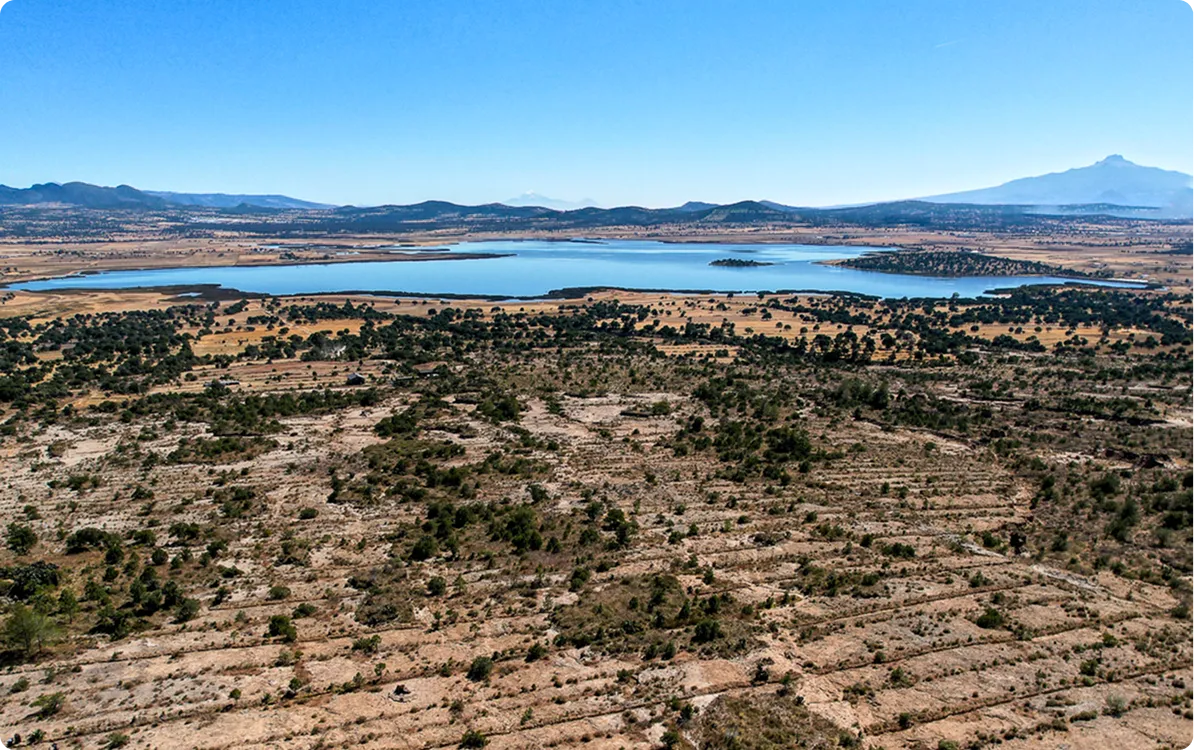
The complexity of these challenges calls for approaches that go beyond traditional infrastructure and consumption-efficiency measures. In this context, nature-based solutions (NbS)—actions that protect, restore, and manage ecosystems to address social and environmental challenges, often by emulating or drawing inspiration from natural processes—are emerging as particularly relevant for water security. The United Nations Development Programme (UNDP) defines these actions as strategies that can improve the provision of hydrological services and increase water resilience in priority watersheds through the participation of communities, civil society organizations, government institutions, and other key stakeholders (UNDP, 2025). By working with natural water processes—such as capture, infiltration, and flow regulation—NbS strengthen water quantity, quality, and availability at the landscape scale, offering an integrated perspective that recognizes the interdependence between ecological systems and water security.
.JPG)
Traditionally, corporate and institutional discussions around water have focused on water footprint metrics and the efficiency of direct resource use. These metrics are undoubtedly useful for identifying pressures and trends within operations or supply chains, and their continuous quantification remains essential. However, their scope is limited if they are not linked to water risks beyond companies’ operational control. Measuring use does not equate to securing water—especially in contexts of climate variability, recurring drought, and aquifer overexploitation.
From a hydrological perspective, water security depends not only on consumption but also on the territory’s capacity to infiltrate, store, and regulate water. Scientific literature on aquifer recharge highlights that these processes are deeply conditioned by land use, vegetation cover, landscape structure, and ecosystem integrity. When these conditions degrade, even significant reductions in consumption may prove insufficient to sustain water availability in the medium and long term within a watershed.
For this reason, the conversation around water needs to shift from a logic of “measure to reduce” toward one of “ensuring water for users.” This does not seek to discourage water footprint quantification—understanding how much water is used is fundamental to identifying pressures on the resource—but rather to recognize that it is not possible to “replenish” just enough to extract again. Ensuring water requires moving beyond a purely volumetric compensation logic, which, while essential for setting measurable targets, must be complemented by efforts to restore the functionality that allows an aquifer, watershed, or hydrological system to regulate itself stably, even in the presence of productive uses.
From this perspective, ensuring water does not simply mean balancing inputs and outputs, but restoring the territory’s capacity to sustain the hydrological cycle over time. In this sense, water security ceases to be an operational issue and reveals itself for what it truly is: a fundamentally territorial task.
A central component of ensuring water at the territorial level is working with the natural processes that regulate the hydrological cycle, particularly infiltration and aquifer recharge. These processes connect rainfall and surface flows with groundwater that feeds wells, springs, and rivers during dry periods. When ecological systems function healthily, this connection operates continuously and resiliently.
These interventions not only reduce risks of flooding and drought but also generate additional systemic benefits, such as supporting biodiversity, regulating microclimates, storing carbon, and—crucially—enhancing the resilience, adaptability, and long-term viability of supply chains whose relationship with water is oriented toward restoration rather than mere use and control (UNEP-DHI, 2018; Brill et al., 2023).
Scientific evidence shows that, in most studied cases, NbS implemented to improve groundwater recharge produce positive effects on water storage capacity. These solutions operate through elements such as:
This approach is not purely technical. It incorporates ecological, social, and cultural dimensions of water management, recognizing that hydrological services do not exist outside their socioecological and territorial contexts.

For companies whose operations or supply chains depend on water, water security is not a peripheral environmental issue—it is a structural factor of risk and viability. Addressing it from a systemic perspective means recognizing that water availability depends not only on how much is extracted or how efficiently it is used, but on a set of interconnected dimensions that sustain—or erode—the hydrological foundation on which businesses operate.
From this perspective, securing water does not mean merely “offsetting impacts,” but investing in the restoration and maintenance of the ecological and territorial processes that allow water to be generated, infiltrated, and stored in a stable way over time. For companies, this means shifting from a logic of water use and control to one of water risk management grounded in system regeneration—aligning operational continuity with long-term resilience.
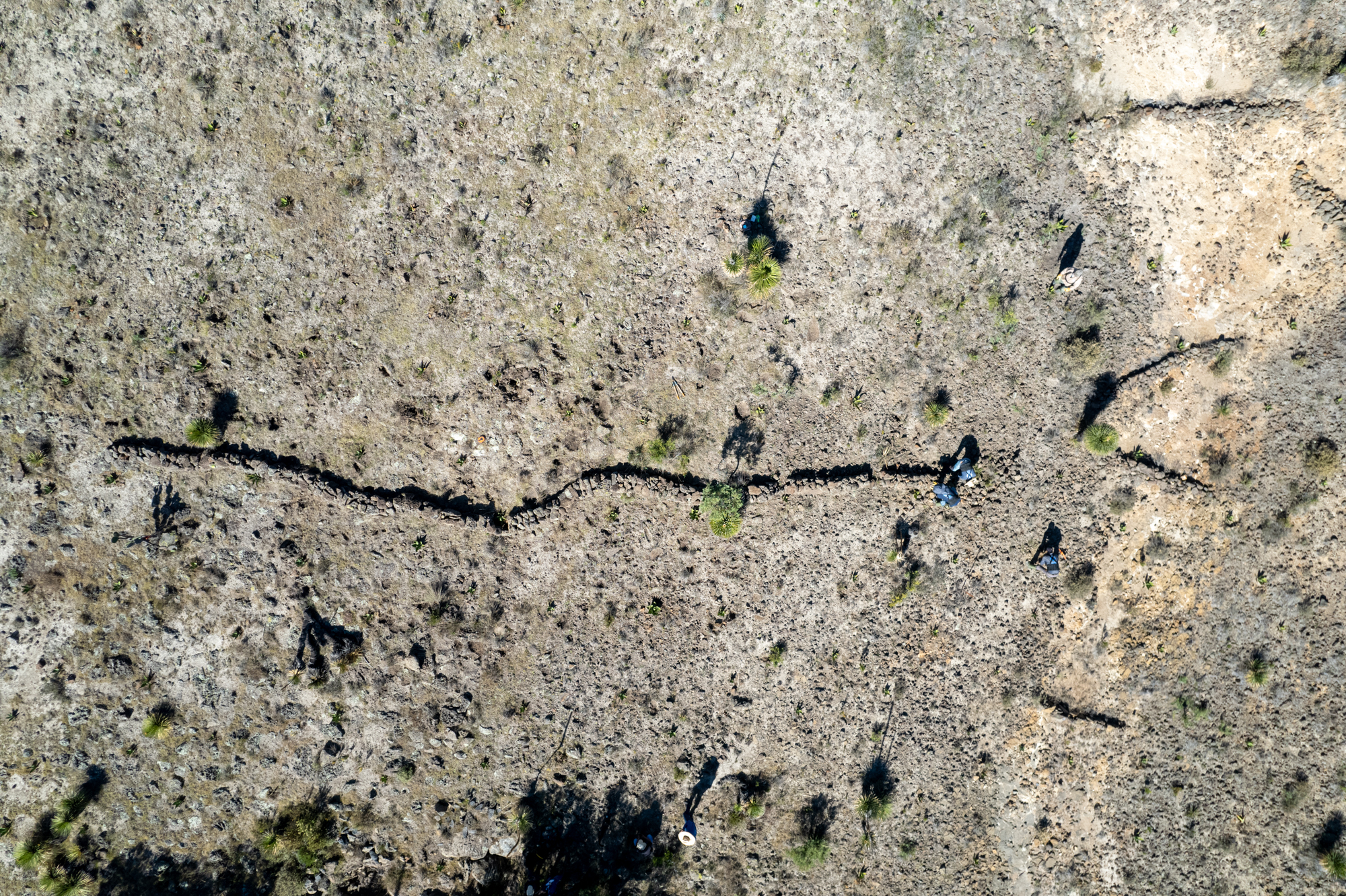
Integrating ecological, hydrological, and social sciences leads to a key conclusion: water security is not a static attribute or a single indicator, but a relational and dynamic condition that emerges from the interaction between ecosystems, people, and climate. It cannot be reduced to a water balance or a simple supply-demand equation; it is an evolving equilibrium, vulnerable or resilient depending on how watershed processes are managed.
From this perspective, solutions should not be conceived solely as mechanisms to mitigate impacts, but as strategies to restore the functionality of the systems that make water possible. Decades of landscape fragmentation, ecosystem degradation, and prioritization of gray infrastructure have weakened the natural capacity of territories to infiltrate, store, and regulate water. For companies, this translates into greater uncertainty, rising costs, socio-environmental conflicts, and operational risks that cannot be resolved through internal efficiency alone.
Adopting an integrated vision means recognizing that the water stability required for economic activity depends on the ecological health of the territory. When natural systems recover their functionality, not only does environmental resilience strengthen, but also supply chain continuity, operational predictability, and the social license to operate. Investing in ecological processes is, in this sense, investing in the foundation that sustains productive activity.
Under this logic, protecting and regenerating water ceases to be a reactive risk management exercise and becomes a long-term strategic decision. Water security thus emerges as a common good upon which both ecosystems and the economies built upon them depend. Ensuring it requires changing how we understand water: no longer as an isolated input to be controlled, but as a living system that—if kept functional—sustains the planet and those who depend on it.
Sandra is a biologist who remains in constant awe of the living world. Deeply moved to be writing again for Toroto, she is currently leading an ecological restoration project on the outskirts of Lake Texcoco, among birds, sunlight, and wetlands.

Explore reflections, research and field learning from our work in ecosystem restoration.