The Web of Life: Why Going Beyond Carbon Matters

Carbon rarely travels alone. In fact, when it transforms—following the well-known carbon cycle—it almost always does so accompanied by other elements. In the atmosphere, which is why we have spent decades discussing it in the context of greenhouse gases, carbon is seldom found in its elemental form. More commonly, it is combined as the much-feared carbon dioxide (CO₂), sometimes as methane (CH₄), and more fleetingly as carbon monoxide (CO), among other chemical forms.
Students of natural sciences in Mexico often memorize two phrases that are repeated almost like mantras. The first: “Mexico is a megadiverse country.” The second, perhaps less solemn but equally revealing—and far more fun to say out loud—is: “The origin of life begins with CHONPS.” This acronym—carbon, hydrogen, oxygen, nitrogen, phosphorus, and sulfur—summarizes the fundamental elements that make life on Earth possible. It is no coincidence that carbon leads the sequence.
In nature, there is no life form, biological interaction, metabolic process, or ecosystem network in which carbon does not play a central role. From energy production to respiration, from the structure of organic molecules to the most complex biogeochemical cycles, carbon is a common thread in life’s most basic processes. And as modernity—and the climate crisis—have made clear, it is also a key component of the extraordinarily complex processes that define today’s planetary challenges.
For this reason, when we speak about carbon in the context of the climate crisis—particularly carbon released into the atmosphere as a result of human activities—it is important not to lose sight of a fundamental fact: its return to the Earth and its integration into climate mitigation and adaptation processes are not artificial phenomena, but deeply natural ones. Carbon has never been foreign to ecosystems; what has changed is the speed, scale, and manner in which we have displaced it beyond ecological balances.
Understanding this is essential. It means recognizing that carbon is not captured in a vacuum, but within living networks made up of soils, water, microorganisms, plants, animals, societies, and cultures. And that in doing so, we are not merely reducing an atmospheric concentration—we are activating (or weakening) multiple interconnected ecological processes.
This is the foundation for thinking about climate action in a more integrated way—beyond carbon without losing it as a central axis: not only as a ledger of tons, but as an opportunity to strengthen the systems that sustain life. With that in mind, let us look more closely at its relationship with biodiversity, ecological resilience, water regulation, and long-term stability. In other words, moving from carbon accounting to ecosystem integrity.
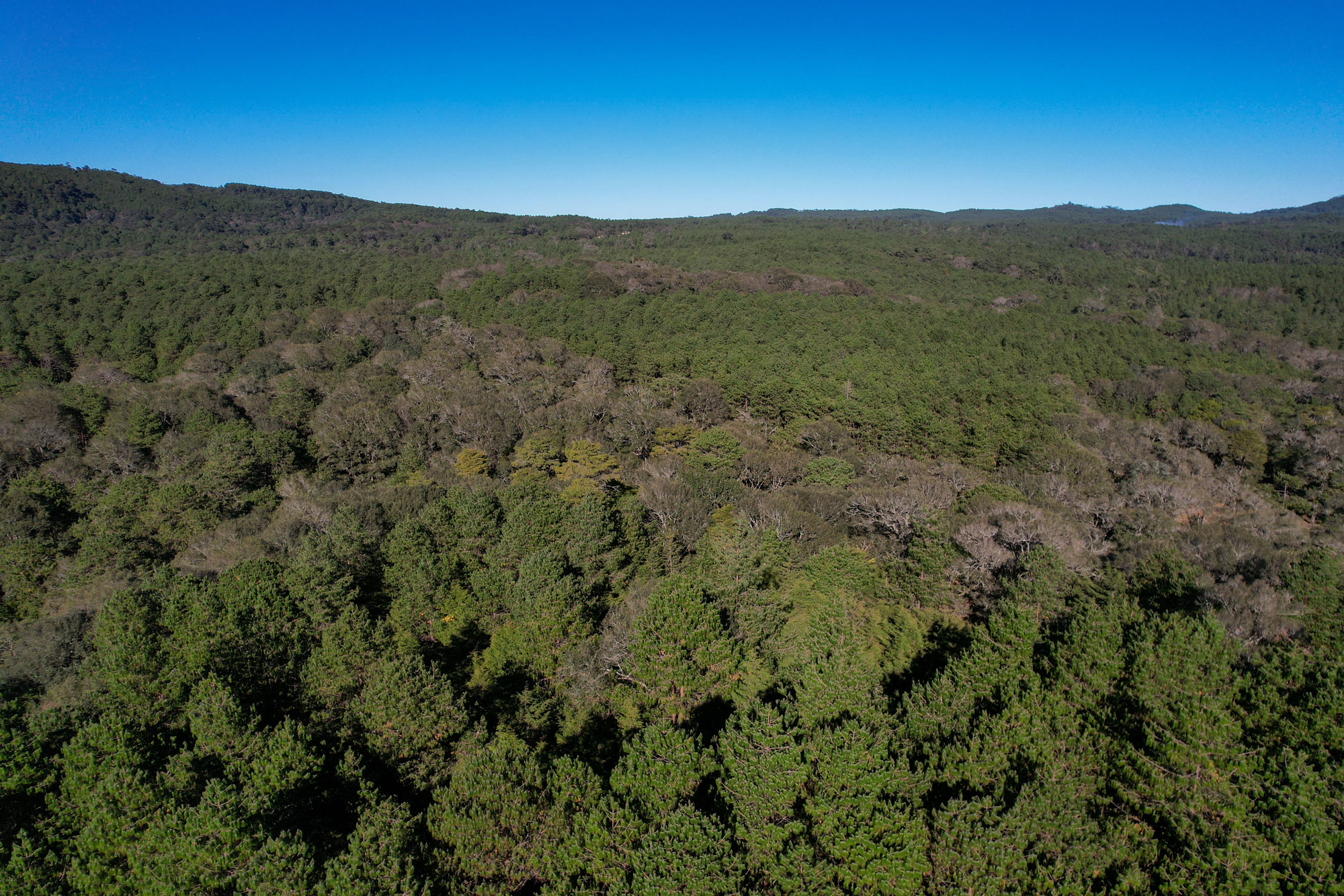
Carbon has never been—and will never be—a perfectly delimited ton. Carbon circulates. It moves between air, leaves, roots, lungs, industrial machinery, soil microorganisms, infiltrating water, and through animals that feed on one another. Every molecule of carbon that is captured is sustained by a living network of ecological relationships operating across multiple scales and timeframes. When that network remains intact, carbon can persist—sometimes even becoming stable, as in certain soils. When it is simplified, it becomes fragile, and more carbon is released than captured.
Over the past decades, climate action—and particularly carbon markets—has relied on a clear and necessary metric: tons of CO₂ captured or avoided. This logic has made it possible to compare projects, structure standards, and mobilize investment toward territories capable of functioning as carbon sinks. In Toroto’s case, it has also helped incentivize climate action by involving the stewards of those sinks—namely ejidos and agrarian communities in Mexico. However, risk emerges when the ton becomes the ultimate objective, rather than a partial expression of far more complex ecological—and today also social—processes.
Thinking of carbon as a measurable end point is useful for climate accounting, but insufficient from an ecological perspective. In ecosystems, carbon is a dynamic flow dependent on photosynthesis, respiration, decomposition, water infiltration, and biological soil activity. It is not simply “stored” and “stabilized”: it is integrated into living systems that continuously transform it. This is why rates of carbon capture and storage differ depending on vegetation type—and therefore on soil type. An alpine grassland does not store carbon in the same way as a tropical rainforest; these ecosystems operate through profoundly different internal interactions.
Soils contain more carbon than the atmosphere and vegetation combined (FAO, 2017). Yet they do not function as inert vaults or untouchable warehouses. They sustain carbon through a living network composed of bacteria, mycorrhizal and non-mycorrhizal fungi, fine roots, and soil fauna that transform carbon into complex and relatively stable organic forms. Through processes such as soil aggregation and incorporation into microbial biomass (among many others), soils can retain carbon for years—even centuries—provided ecological conditions remain intact.
The International Union for Conservation of Nature (IUCN) has documented that soil biodiversity is a determining factor in long-term carbon stability, as it regulates not only carbon capture but also the rate and manner in which carbon returns to the atmosphere (IUCN, 2018). In healthy and diverse soils, carbon release occurs gradually and functionally, as part of unavoidable natural processes: soil respiration, organic matter decomposition, and the constant exchange between biosphere and atmosphere.
This return of carbon to the atmosphere is not, in itself, a problem; it is part of normal ecosystem functioning. When does it become one? When ecological flows decouple from ecological timescales. Human-induced fires, deforestation, land-use change, intensive extractive practices, and similar disruptions break down soil structure, destroy its living systems, and release—in a matter of days or weeks—the carbon that took decades to stabilize and store. In such cases, soil ceases to function as a sink and becomes a source of emissions.
Thus, carbon permanence depends not only on how much is captured, but on how healthy the biological processes sustaining its capture, storage, and stability remain. Protecting and restoring living soils does not prevent carbon from circulating—it always will—but it allows that circulation to remain within the natural margins that maintain climate balance. Ignoring this underground dimension amounts to measuring carbon without understanding where—or how—it is sustained.
Not all tons of carbon are equally stable. Two carbon capture projects may report similar figures, yet face very different outcomes in the event of prolonged drought, wildfire, or pest outbreaks. The difference rarely lies in the number itself, and almost always in the ecological complexity of the system that supports it.
Diverse ecosystems—with multiple species, varied vegetation strata, and complex trophic relationships—tend to distribute carbon across multiple compartments: aboveground biomass, deep roots, soil organic matter, animal bodies, and relatively stable food webs. This distribution functions as a buffering mechanism against disturbance. When one part of the system is affected, others continue operating and compensating until a new equilibrium is reached.
A simple example is the predator–prey relationship. When a predator feeds on multiple species, the temporary decline of one does not collapse the system; pressure is redistributed among the others, allowing dynamics to stabilize again—provided the ecosystem maintains its functional integrity. While simplified, this example illustrates a broader reality: a dense web of ecological interactions sustaining system function. This capacity to absorb impacts, reorganize, and continue functioning is known as ecological resilience—the ability of nature to recover from disturbance.
Simplified systems, by contrast, may capture carbon quickly but lose it just as easily. Scientific literature has documented that biodiversity loss reduces ecosystems’ capacity to maintain key functions, including carbon capture and retention (Isbell et al., 2017; IPBES, 2019).
In Mexico, this dynamic is particularly visible in forests, tropical forests, mangroves, and wetlands. The National Forestry Commission (CONAFOR) has noted that these ecosystems not only capture carbon, but also regulate the hydrological cycle, protect soils, and reduce vulnerability to extreme climate events. In such cases, carbon is not an end in itself, but a co-benefit of healthy ecological systems. Biodiversity—more than any isolated variable—is the true metric of resilience.
Speaking about carbon without speaking about water is another simplification of the web of life—and a common reduction in carbon accounting. Water is not a complement to the carbon cycle; it is one of its main regulators. Without sufficient—and well-distributed—water across the landscape, carbon capture and its integration into soil and biomass weaken.
The relationship is direct. When water is scarce, plants close their stomata—structures similar to pores in human skin through which they “breathe”—to prevent moisture loss. In doing so, they reduce CO₂ intake and photosynthesis. As Stocker et al. (2021) note in Nature, “water availability is one of the main factors limiting terrestrial primary productivity at the global scale.” Less photosynthesis means less plant growth and, therefore, less carbon incorporated into biomass.
Water’s role does not end at the surface. Soil moisture also regulates what happens underground. Adequate moisture levels allow roots and microorganisms to transform carbon into more stable organic matter, protected within soil aggregates and structure. According to Wang et al. (2024), “soil moisture directly regulates microbial respiration and carbon stability.” When soils dry excessively—as during prolonged droughts—this dynamic breaks down: stable carbon formation decreases and release to the atmosphere increases. Similar imbalances occur under waterlogged conditions.
Conversely, well-infiltrated soils with good water retention create a virtuous cycle. Carbon improves soil structure; improved structure enhances water retention and aeration; and water, in turn, sustains productivity and ongoing carbon capture. These are not isolated processes, but mutually reinforcing mechanisms.
At the landscape scale, this relationship becomes even more evident. Global studies have shown that soil moisture variability is one of the primary controls on net carbon uptake by terrestrial ecosystems (Stocker et al., 2021). Where water infiltrates, is stored, and moves slowly—rather than running off or evaporating entirely—ecosystems are better able to withstand drought and maintain their function as carbon sinks.
Living, structurally complex soils infiltrate more water, reduce runoff, and sustain productivity even during dry periods. This deep connection between water, soil, and vegetation explains why projects that integrate ecological restoration and aquifer recharge tend to generate more durable climate benefits: they do not only capture carbon, but strengthen landscape resilience and water availability.
It is important to clarify that while water is a key factor in carbon projects, water projects operate under their own specific metrics. Water accounting follows different variables, and its metrics are not interchangeable with those of carbon.
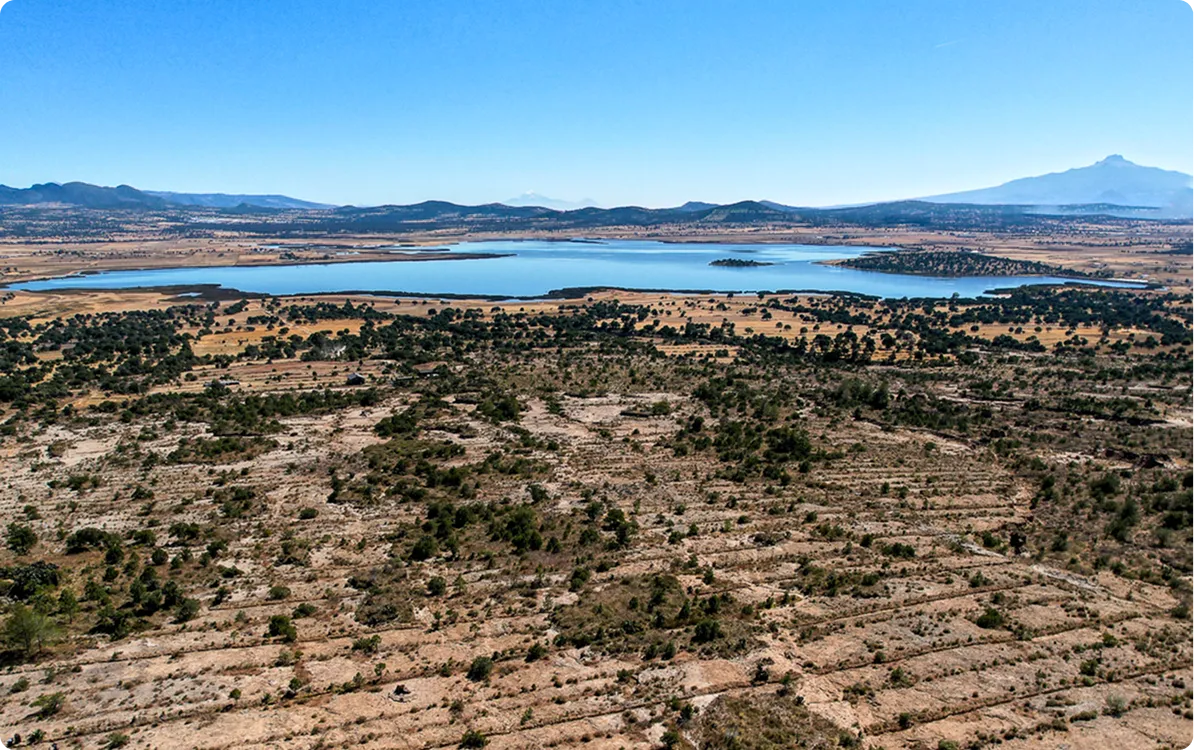
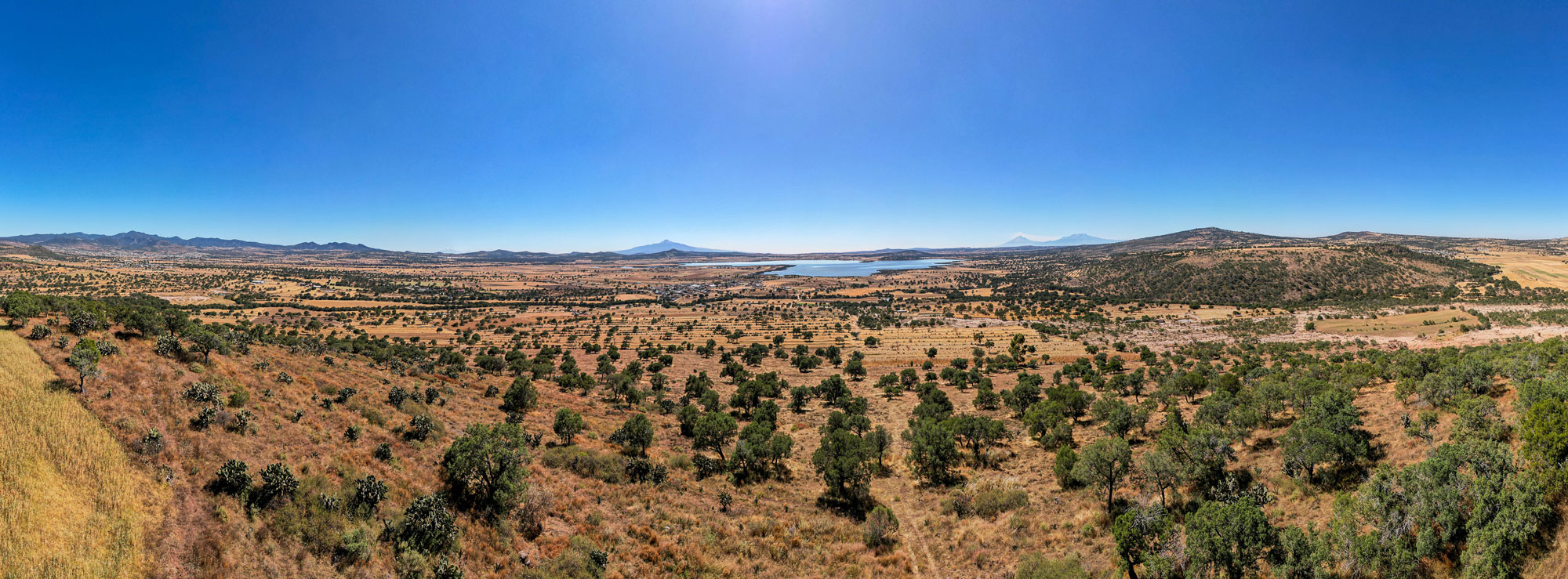
To illustrate, Toroto’s project focused on aquifer recharge in Alto Atoyac, Tlaxcala, integrates nature-based solutions in a way that makes it inherently comprehensive. By improving soils to promote water infiltration, the project progressively strengthens their function as increasingly stable reservoirs for carbon storage. These are distinct approaches, with different metrics and objectives, yet together they enable a pathway that goes beyond carbon.
Critiquing the “tons first” approach—the accounting exercise on which carbon markets base decision-making and results reporting—is not a rejection of measurement or carbon accounting instruments. Rather, it is an invitation to broaden the framework through which climate success is defined. For years, quantifying avoided emissions or captured carbon has been an effective entry point for mobilizing finance, standardizing projects, and translating complex ecological processes into metrics understandable to markets and decision-makers. However, in today’s climate crisis, the limits of this approach are increasingly evident.
We now know that capturing carbon is not enough; ensuring its permanence over time is indispensable. Climate change is altering the biophysical conditions that sustain natural sinks. Prolonged droughts, more intense fires, pests, and extreme events are reducing ecosystems’ capacity to store carbon stably—and in some cases turning former sinks into net sources of emissions.
In this context, projects focused exclusively on maximizing captured tons—without considering biodiversity, integrated water management, soil health, or territorial governance—risk generating fragile and short-lived climate benefits. A ton captured in a degraded ecosystem, hydrologically disconnected landscape, or socially conflicted territory is inherently more vulnerable than a ton integrated into a functional, well-managed ecological system.
Going beyond carbon means recognizing that ecosystem integrity is the true determinant of the climate quality of a captured ton. Biological diversity provides functional redundancy and adaptive capacity; ecosystem structure regulates flows of water and energy; and relationships with local communities define day-to-day land management—and therefore the permanence of benefits.
From this perspective, carbon ceases to be an end in itself and becomes one indicator—important, but not sufficient—of resilient socioecological systems. This shift does not eliminate the need for rigorous metrics; it calls for more intelligent ones: metrics capable of reflecting not only how much carbon is captured, but under what ecological, hydrological, and social conditions that capture is sustained over the long term.
Throughout this exploration, one idea becomes unavoidable: it is artificial to speak of carbon without simultaneously speaking of soils, water, biodiversity, and people. Not because these concepts are interchangeable, but because in ecological reality they always operate in an intertwined manner. Carbon does not move through isolated compartments; it circulates within complex living systems, where each process depends on many others to endure over time.
In a megadiverse country like Mexico—where a significant portion of the territory is stewarded by ejidos and communities with deep knowledge of their landscapes—the most robust climate solutions are not those that simplify territory to make it measurable, but those that work with its complexity. Living soils, infiltrating and stored water, diverse vegetation, and local governance are not “co-benefits” of carbon; they are the conditions that make permanence possible.
Designing climate solutions from the living web requires changing the central question. Not only how much carbon is captured, but where, how, and through which ecological and social relationships that capture and storage are sustained. It means recognizing that climate stability is built not solely through metrics, but through functional landscapes capable of withstanding droughts, fires, and growing disturbances. In that context, carbon is an emergent outcome of well-cared-for systems, not an isolated objective.
Projects that integrate soil restoration, water management, biological diversity, and community participation—such as those grounded in nature-based solutions—demonstrate that climate action and territorial resilience can be aligned. Not because they ignore carbon accounting, but because they situate it within a broader framework: the living systems that sustain it.
Carbon will continue to be a central metric in global climate action. But its true value lies not only in the reported figure, but in the ecological story that supports it. Understanding that story—and designing from it—is what allows us to move from necessary yet limited climate accounting toward climate solutions that are ecologically grounded, socially meaningful, and enduring.
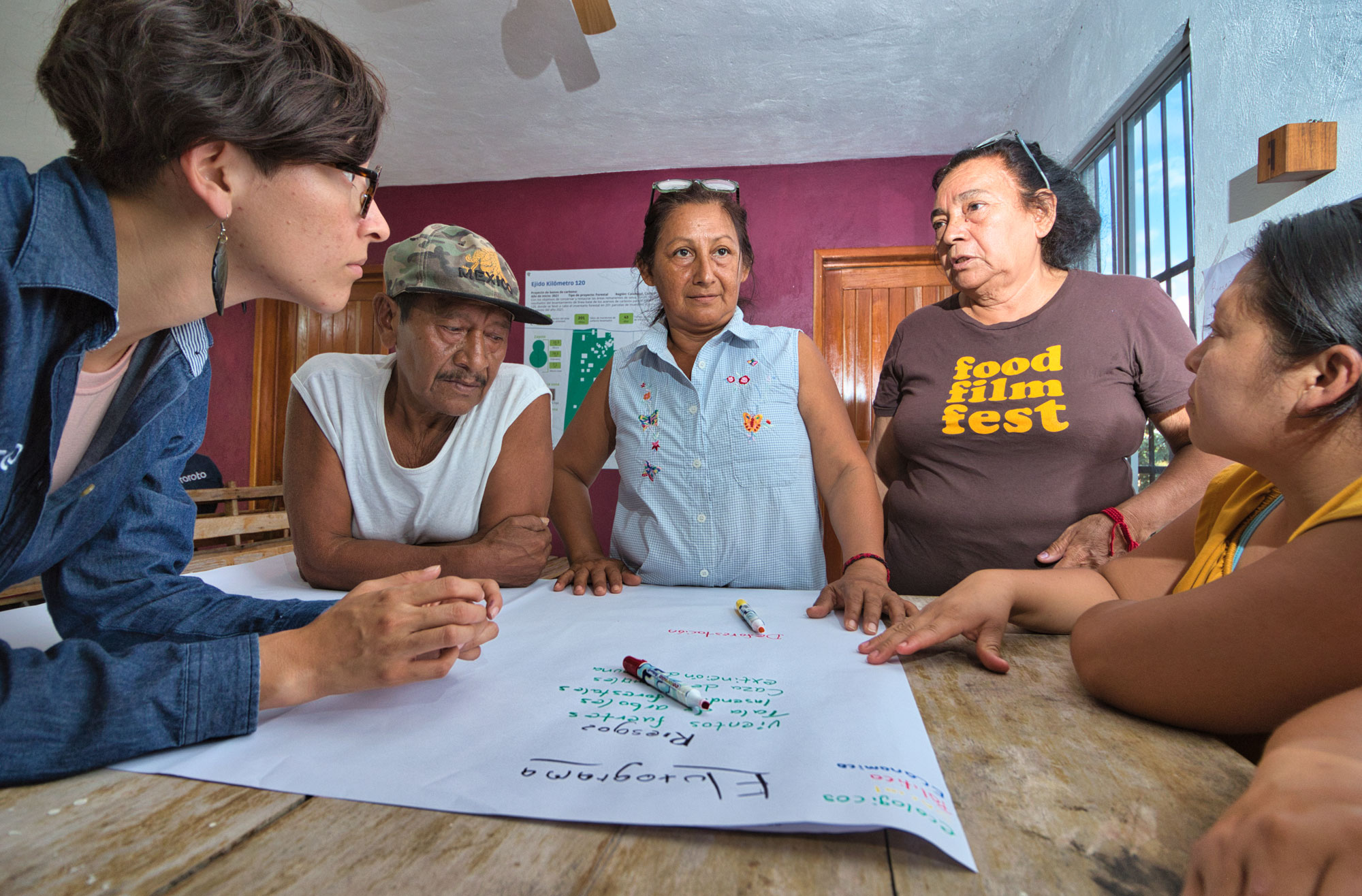
Sandra is a biologist who remains in constant awe of the living world. Deeply moved to be writing again for Toroto, she is currently leading an ecological restoration project on the outskirts of Lake Texcoco, among birds, sunlight, and wetlands.
• CONAFOR (Comisión Nacional Forestal). (2018). Bosques y cambio climático. Gobierno de México.
https://www.gob.mx/conafor/documentos/bosques-y-cambio-climatico-23762
• CONAFOR (Comisión Nacional Forestal). (2020). ¿Cuánto carbono secuestran los ecosistemas forestales? Gobierno de México.
https://www.gob.mx/conafor/articulos/cuanto-carbono-secuestran-los-ecosistemas-forestales
• FAO. (2017). Soil organic carbon: The hidden potential. Food and Agriculture Organization of the United Nations.
https://www.fao.org/3/i6937e/i6937e.pdf
• IPBES. (2019). Global assessment report on biodiversity and ecosystem services. Intergovernmental Science-Policy Platform on Biodiversity and Ecosystem Services.
https://ipbes.net/global-assessment
• Isbell, F., Cowles, J., Dee, L. E., Loreau, M., Reich, P. B., Gonzalez, A., … Schmid, B. (2017). Biodiversity increases the resistance of ecosystem productivity to climate extremes. Nature, 526(7574), 574–577.
https://doi.org/10.1038/nature15374
• Millennium Ecosystem Assessment. (2005). Ecosystems and human well-being: Synthesis. Island Press.
https://www.millenniumassessment.org
• Stocker, B. D., Zscheischler, J., Keenan, T. F., Prentice, I. C., Peñuelas, J., & Seneviratne, S. I. (2021). Drought impacts on terrestrial primary production: A global synthesis. Nature, 600(7887), 280–286.
https://doi.org/10.1038/s41586-021-03325-5
• Unión Internacional para la Conservación de la Naturaleza (UICN). (2018). La biodiversidad del suelo y su papel en la provisión de servicios ecosistémicos. UICN.
https://portals.iucn.org/library/node/47786
• Wang, Y., Chen, Y., Fang, Y., & Luo, Y. (2024). Soil moisture regulates microbial respiration and soil carbon stability under climate extremes. npj Climate and Atmospheric Science, 7(1), Article 88.
https://doi.org/10.1038/s41612-024-00888-8
• Zhang, Y., Peña-Arancibia, J. L., McVicar, T. R., Chiew, F. H. S., Vaze, J., Liu, C., … Pan, M. (2018). Multi-decadal trends in global terrestrial evapotranspiration and its components. Scientific Reports, 8, Article 13173.
https://doi.org/10.1038/s41598-018-31543-5

Explore reflections, research and field learning from our work in ecosystem restoration.